

Any football fan will tell you it’s the hope that kills you. In small business, though, sometimes it’s the uncertainty that does the damage — not even through a thousand paper cuts, but through that constant sense of something hanging over all of our heads.
So how do we own the uncertainty? How do we manage our energy and still make good decisions in business when we’re unsure about the future?
Welcome to Don’t Waste a Good Recession, episode two.
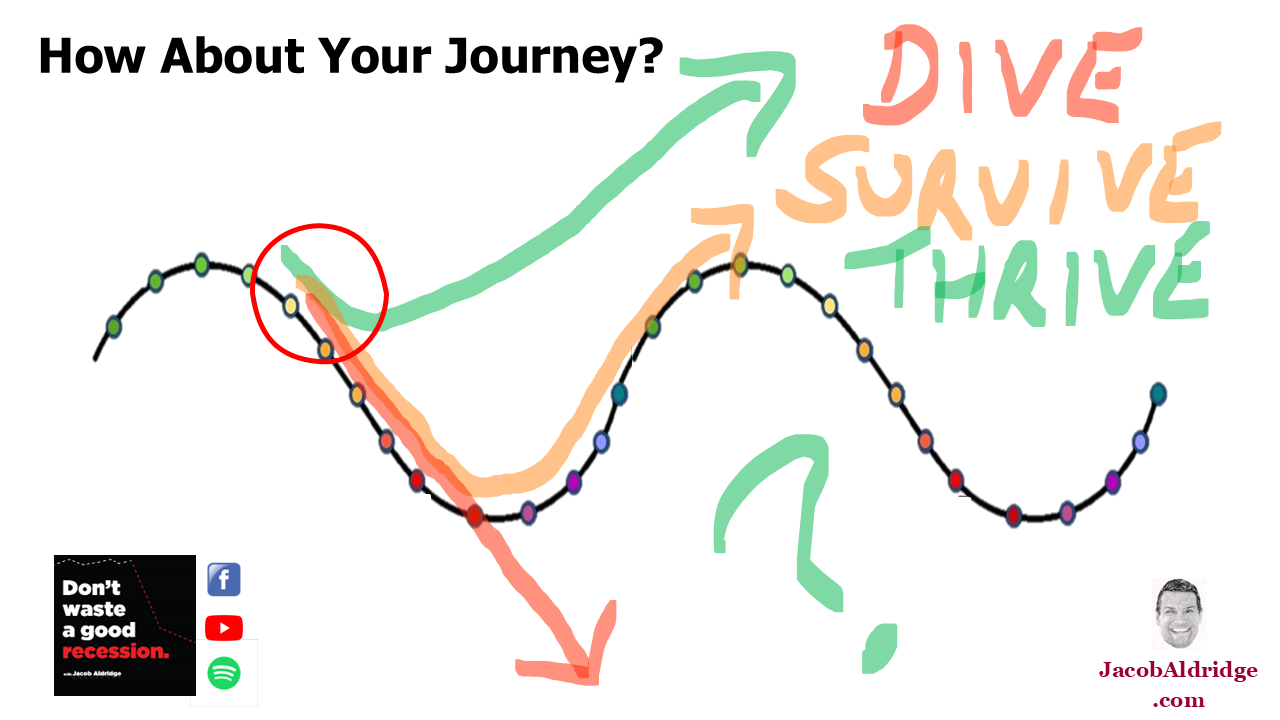
Dive, Survive, or Thrive?
Last week, I talked about the three different ways that small businesses respond to an economic downturn. If you want to thrive, not just survive, a key part is how you respond. Not just reacting, not just going in blind.
This week, I’m going to share a key framework you can use to stay in control and take ownership of the outcomes in your life and your business. I’m talking about the Circles of Control framework by Stephen Covey.
The Circles of Control Framework
At the core is the Circle of Control. These are all the things you are fully in control of. Just outside that is the Circle of Influence: things you don’t fully control but can influence. And then on the outside is the Circle of Concern: things you can’t influence at all, but you can choose whether (or not) they concern you.
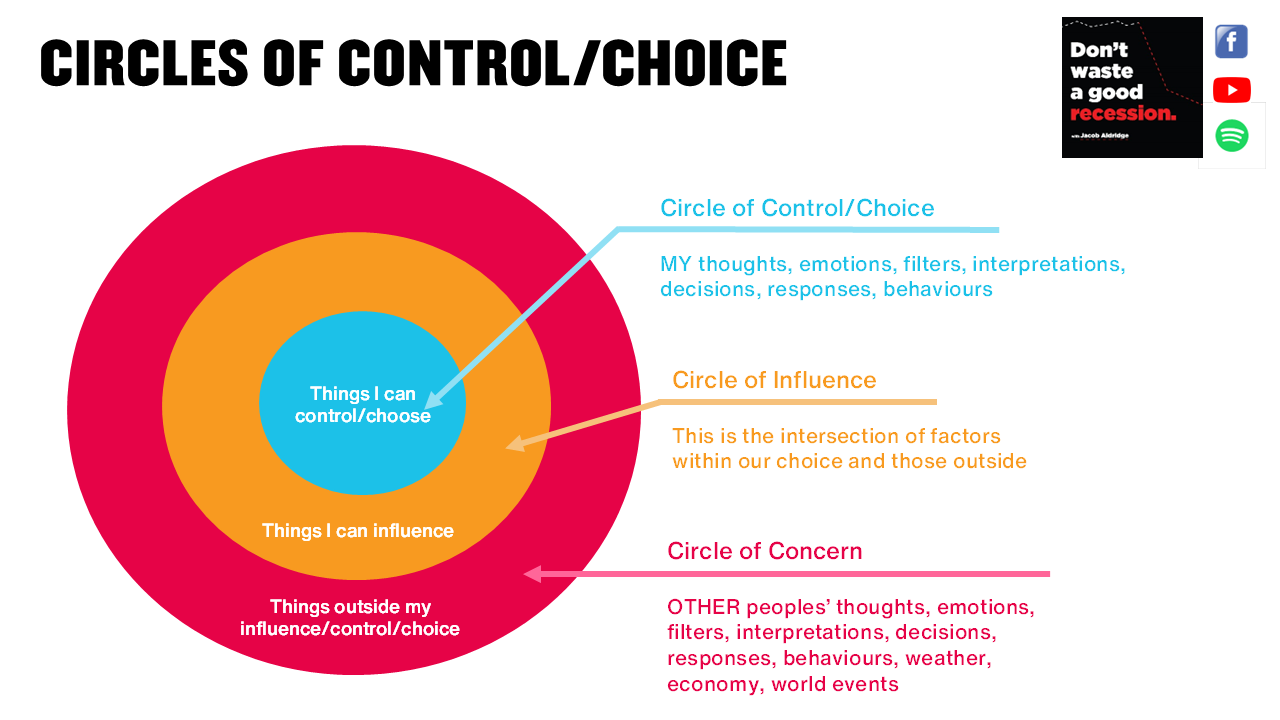
A simple analogy I like to use is football. I can control going to training and turning up on time each week. I can influence how well my team plays, but whether my team wins or loses isn’t fully within my control. And then there’s my circle of concern — where I choose to put Manchester United. When they have a great season, I feel great. When they don’t, I don’t. I’m choosing to let them concern me, even though I have no influence over their results whatsoever.
Where We Blur the Lines
In life, we often blur these lines, especially with media, advertising, and social media. There are so many things in that circle of concern that try to make you feel invested, like you have influence over them, so you end up setting your emotional state based on their ups and downs.
Instead, focus on what you truly control in life and business. You can control your response to your thoughts. You can control how you handle your feelings — whether you acknowledge them and let them go, or hold onto them. You can control who you spend time with, whose advice you take, and who you listen to.
In your circle of influence, depending on your business, you can influence your team, your clients’ success, and your financial outcomes.
And then there’s the circle of concern: the news, the media, what politicians are doing, wars, oil prices, global costs. These are outside your influence. How much you let them impact you emotionally is entirely up to you.
That’s not to say you ignore them. You might feel the pressure when looking at fuel bills, cost projections, or clients starting to struggle. But it’s about how much you let those concerns influence you — and how quickly you bring your focus back to what you can control and influence.
Bringing It Back to Your Business
I’ll link to a previous video where I go deeper into the key indicators you should be measuring in your business. We’ll update that for 2026, especially given how much has changed economically since 2021 and 2022. But the core message remains the same: what do you control, what can you influence, and how well are you measuring the numbers that give you forward visibility on your business?
It’s easy to get sucked into generalisations about house prices, oil, food, or transport. But all of that is just noise until you bring it back to your own business and ask: what actually matters here, and how will I respond?
That response will differ depending on your industry, your vision, your stage of business, and your life.
Cash is King
One thing I strongly encourage you to focus on is cash. In a downturn, cash can dry up quickly. Many of your costs — especially fixed overheads — don’t go away. Staffing costs can be reduced, but not without difficult conversations, and those are decisions you want to prepare for, not rush into.
If your costs stay the same while revenue slows — fewer clients, less work, or slower payments — cash flow becomes critical. So what can you do?
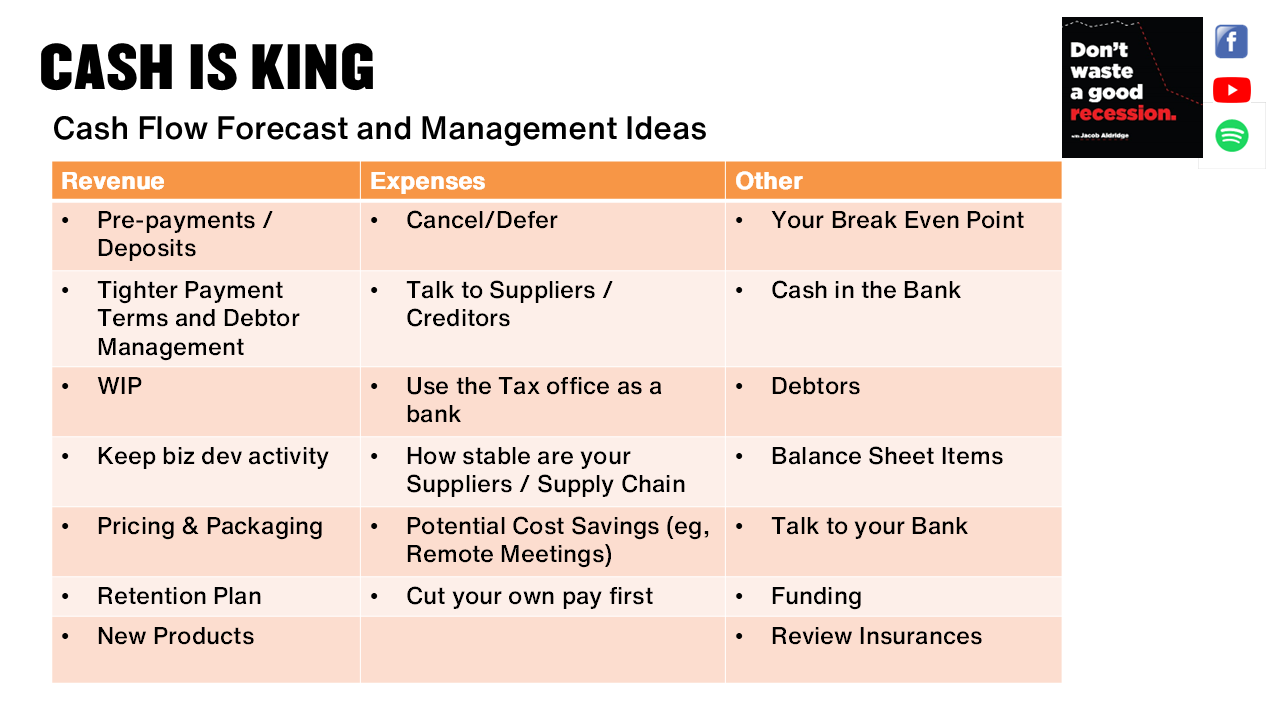
It can be as simple as sticking to payment terms, not paying suppliers early unless necessary, and making sure your clients pay on time. You might even tighten payment terms. If you can take deposits or pre-payments, now is the time to consider it, while things are still relatively stable.
This is also the time to tighten your financial hygiene. Train your team to complete work faster, invoice sooner, and understand their impact on cash flow. Bring their focus back to what they control and influence in the financial performance of the business.
The Point of Maximum Opportunity
There’s an old saying: the best time to buy is when there’s blood on the streets. The point of maximum opportunity comes at the bottom of a downturn — but businesses that are just surviving aren’t ready to take those opportunities.
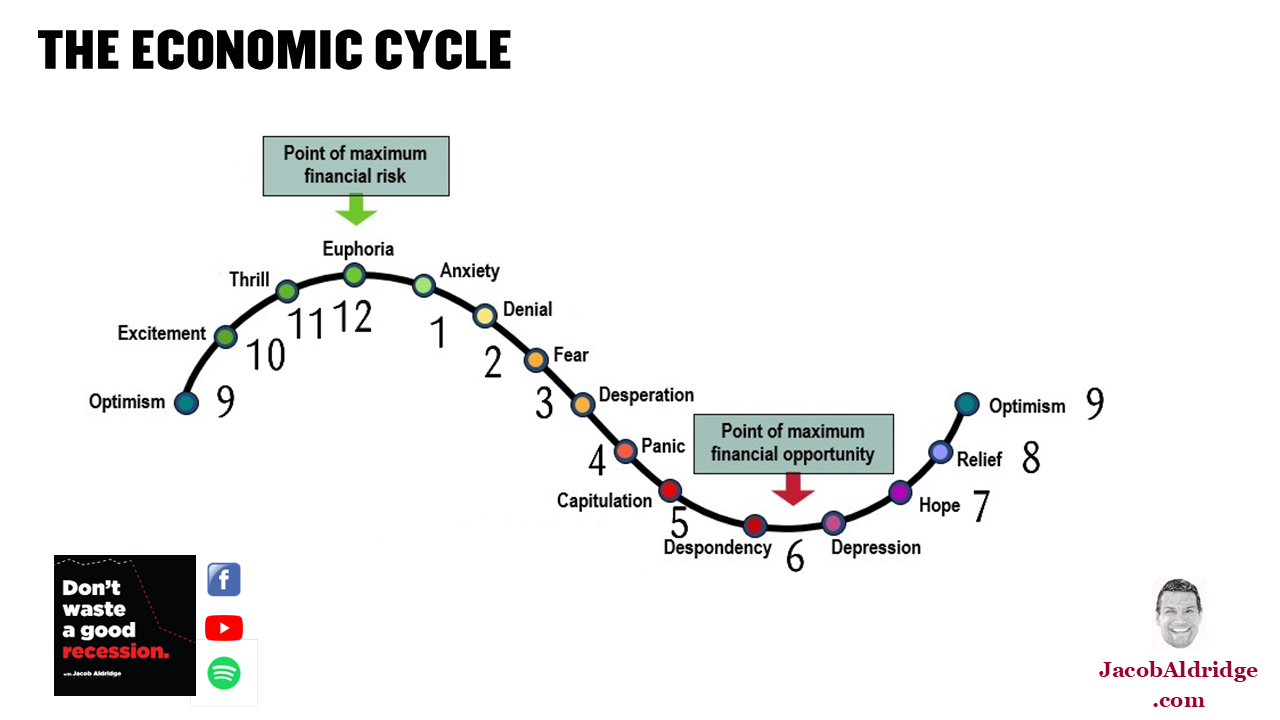
Cash is your biggest advantage. Over the next 6 to 18 months, the businesses that are cashed up will be the ones positioned to take advantage of what emerges.
The K-Shaped Recovery
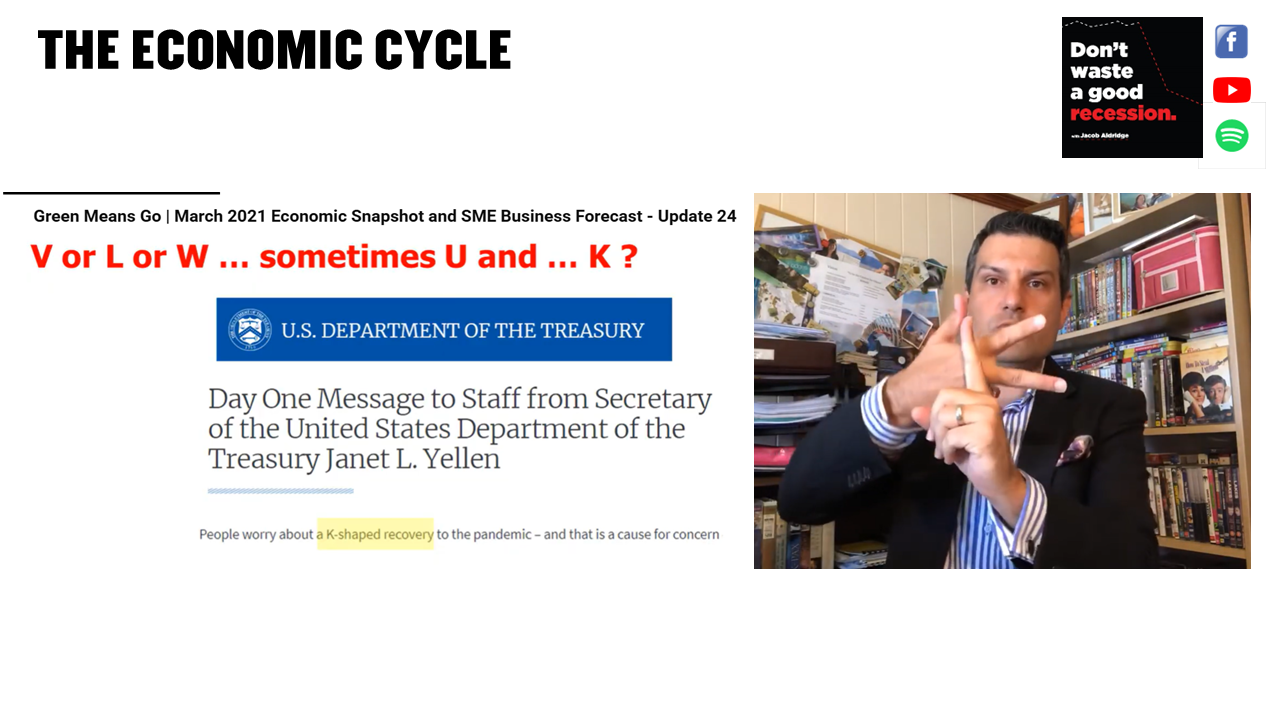
If you think back to the COVID recession, we saw a K-shaped recovery — some businesses thrived while others struggled. The difference often came down to who held assets and who was positioned to benefit from the recovery, stimulus, and inflation.
Start Now, In the Before Phase
We’re still early in this cycle. Now is the time to ask: where do I want to be when opportunity knocks? How do I make sure I’m ready to take it?
It comes back to cash. It comes back to understanding your business indicators. And it comes back to your circle of control — focusing on what you control, influencing what you can, and choosing whether to be consumed by everything else.
Because that external noise is just taking time and energy away from improving your own world.