

Succession in a Family Business. In Blackboard Fridays Episode 19, Jacob talks about Leadership, Commercial Vision, and Business Lifecycle. Need this implemented into your business? Talk to the international business advisor who can do exactly that – Contact Jacob, Learn More, or Subscribe for Updates.
Knowing When and How to implement your family business succession plan can be difficult. The reality is that every business and every family is different.
In this week’s #BlackboardFriday, I share a successful family business case study, and the 3 general principles we applied to help ensure the transition was smooth and profitable for the family, the business, and the team.
- Making sure incoming family members had a clear role from day one – and it wasn’t as CEO
- Involving the team in the design of the succession plan, so they supported it through speedbumps and hurdles rather than reacting poorly
- Identifying a simple project that allowed the next generation to quickly ‘step out from the shadow’ of their parents – ensuring any comparisons or ‘how we used to do things’ are quashed and the business can look forward.
Who is Jacob Aldridge, Business Coach?
“The smart and quirky advisor who gets sh!t done in business.”
Since April 2006, I’ve been an international business advisor providing bespoke solutions for privately-owned businesses with 12-96 employees.
At this stage you have proven your business model, but you’re struggling to turn aspirations into day-to-day reality. You are still responsible for all 28 areas of your business, but you don’t have the time or budget to hire 28 different experts.
You need 1 person you can trust who can show you how everything in your business is connected, and which areas to prioritise first.
That’s me.
Learn more here. Or Let’s chat.
Transcript
Anna Karenina taught us that all happy families are alike, and every unhappy family is unhappy in its own special way.
The same is true with family business succession.
The challenges you face are going to be that little bit special based on your business, your vision, and of course your family. There are, however, some guiding principles – and this week I’m going to talk us through a case study of a successful family succession I recently helped coach.
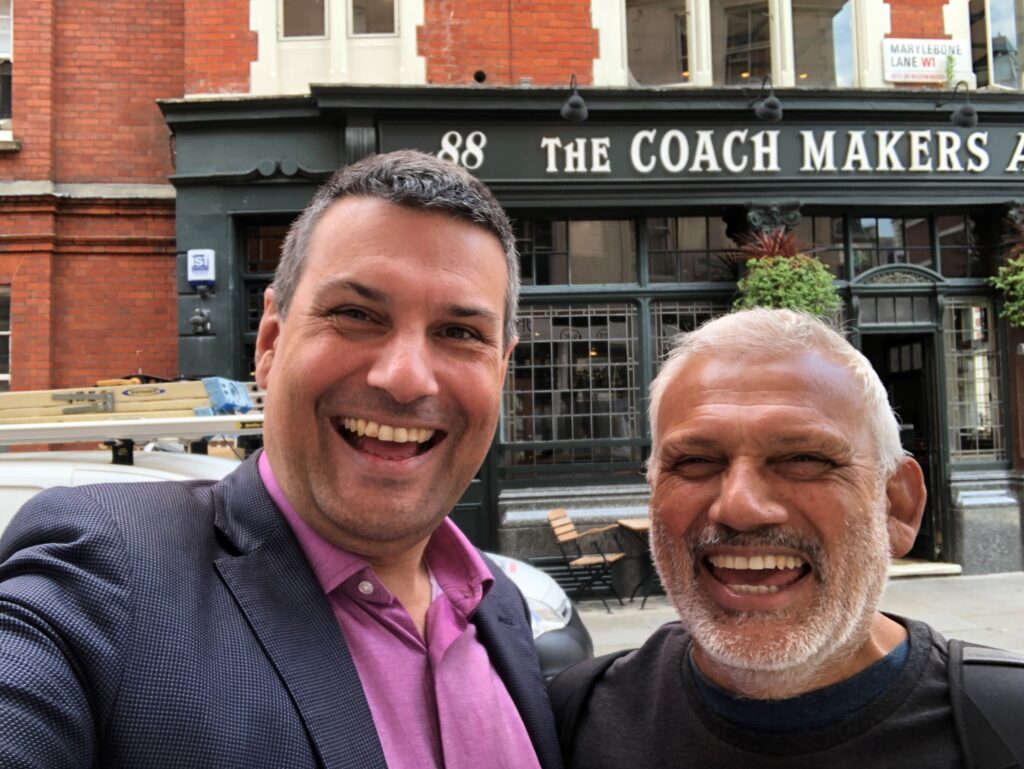
Future family succession plan maybe?
Hi Dad, I’m Jacob
It all started when I got a phone call from the father.
He said, “Jacob, I have one more thing that we need to do with the business. We’re about to move premises … and then it’ll be done. The business will be perfect it, will be ready to hand over to my sons.”
Two sons, I might add, neither of whom at that time worked in the business.
Red Flags 🚩 🚩 🚩 🚩 🚩
Whenever a business owner tells me that business is done, is perfect, I get scared!
I get very worried for them, because it means they don’t have that next big vision. They’re not looking at how they can constantly and improve, and if you’re not looking to constantly improve in your business, one of your competitors is, and that will lead to problems down the track.
So, I knew we had to act fast, and this was the conversation we had.
3 Steps to Successful Family Succession
1) Clear Role for the Next Generation
The first thing we needed to do was work out structurally where the next generation was going to step into the business.
Now in this case, we thought we might have been planning a three to five-year entry for those sons; in fact, they both stepped up immediately when they were given the opportunity.
When they knew dad was finally serious to hand over, both were working in the business full time within six months, which is a testament to that family. We had to work out where they were going to fit.
This was the existing structure in a team of about 40 people.
- Dad is the CEO
- A long-standing general manager
- A long-standing operations manager
- A long-standing finance manager
- and then this Sales team that just kind of floated around.
So, the obvious opportunity was to take one of the sons, who had worked in the business at various times over the years, and make him the Sales Manager.
The other son has less experience in the business. So we put him in underneath the general manager, and built a 12-month plan for him to get around a whole lot of different functions and understand the business holistically.
What we didn’t want to do was very quickly bring a son into the business and replace the CEO, replace dad. We wanted to slowly plan the journey for dad to become Chairman, and son to become CEO.
2) Involve the Team In Advance
This is a saying, I love sharing; I stole it off a great mentor of mine a guy called Nic Rixon and it’s relevant for any strategic project you and your business want to complete.
If you tell your team in advance, it’s an explanation. If you tell them in arrears, it’s an excuse.
In Advance is an Explanation; In Arrears is an Excuse
So, you want to work with your team to make sure that they’re involved in the planning of any change, not just the change itself.
Because when there are issues with the change (and I guarantee you no matter what change you’re putting into your business there will be issues) if the team has been involved up front, when you’ve had conversations about some of the difficulties and what you’re planning to do to mitigate those, then the team feel they’ve had that explained to them.
They’re on board with the change management process. If you have problems you haven’t communicated, and you turn around to the team and go, ‘Well that was always going to happen’, it just sounds like an excuse. You didn’t get their buy-in.
So, the team were very excited to have both sons coming into the business. This harks back to my Red Flag when there’s no vision – while few of the team would have been able to articulate the reasons why, it became apparent that there was a malaise, a down energy across the business … waiting to know what dad was going to do next.
After all, if the business was “done” did that mean dad might just retire … and close the doors one day, leaving everyone out of a job? If he kicked the bucket [2025 Update: I had coffee with him just before leaving Australia this year; 10 years on he’s alive and well] would their career be sold for spare parts?

So bringing in the next generation, to be able to see that once more the business had a big vision, was a rapid energy boost. Having a long-term future outlooks once again gave them sustainability, opportunity, and career progression.
3) A Simple Project to Prove Themselves
A conversation I have in any family succession situation is “What are we going to do with the next generation when they come in, to make sure that they can step out of the parental shadow?”
Nepo Babies, and let’s be honest that what’s most family business succession involves, can be viewed poorly by the team they will one day lead. We need to quickly allow them to make their own mark on the business, so that the team the clients are not constantly comparing them to dad and mum, to the way we always used to do things.
It doesn’t have to be big; just something that lets them stamp their mark on the business. In this case there were several things that we identified and were able to work on, but a big one was having a conversation about revenue growth.

Dad and I broke down the Revenue from the past 5 years, and sorted it into Product categories. Topline the revenue had been fairly flat … and the actual mix of product sales hadn’t changed much either.
So the Revenue question was:
- Are the sons going to come in and help rapidly grow revenue and sales from the existing products, or
- Are they going to create a separate product – a product extension?
In this case, they opted for Option 2 Product Extension. This was a service line that dad had never developed for their business, but had seen as an opportunity for many years – it was a good idea and aligned with the existing team.
As we designed that project, and did the market testing, we did in fact realise that the best outcome would be a new brand and a whole separate structure. It turned out the opportunity was enormous, if the family were willing to take on some debt to fund growth – a new entity, under the same building and sharing some resources, helped with risk management.
As a result of that, this second business is right now as profitable as the original business. So, mum and dad who still own part of the company have got a business that’s (in terms of profit) twice the size as the one that they handed over to their sons!
A Happy Family
Now in this situation, one of the great benefits they had was the sons who are willing to step up, and no issues around family, no history of disharmony or distrust, which can show up in families and family businesses.
If you have the conversation with your family, if you plan and if you have the conversation with the team about the future, then you’re a step ahead of most family businesses when it comes to succession.
You’ve got the ability to make that family succession happen smoothly as opposed to finding yourself throwing the next generation under the train.
Next Steps
Want to learn more about how this can apply to your business? It costs nothing to chat:
- Email me jacob@jacobaldridge.com (I read them all)
- Call, Text, or WhatsApp me +61 427 151 181
- Or just Subscribe https://jacobaldridge.com/about/subscribe-to-jacob-aldridge-com/ to stay in touch



[…] Episode 19, Succession in a Family Business – https://jacobaldridge.com/business/succession-in-a-family-business/ […]