
When I shipped off to Schoolies Week in 1998, my mum sent me with a gift pack – Berocca, Breath spray, and Birth control.
(Only two of them were necessary…)
She passed judgement on the breath spray: “Why would you use that stuff, it smells so artificial?”
Which missed the point entirely. It’s not about comparing artificial minty freshness with naturally beautiful breath. You have to ask “Is fake better than the actual reality of my hangover breath?”
The Wrong Comparison
Which brings me to AI “slop”. So much of the criticism I see is making my mum’s mistake: “Why would a company use AI images and marketing – it’s so much worse than:
- Vetting three graphic designers
- Briefing them over a few days
- Receiving quotes over a week
- Adding to your budget and cash flow
- Doing rounds of revisions
- Producing something professional and beautiful.”
Absolutely true – a good designer will beat good AI.
Much like my hangover breath, however, that’s not the comparison.
Many SMEs don’t have the luxury of time or money to engage a good designer. And good AI is better than a bad designer – or nothing at all.
The Real Question
Not all AI is AI Slop. Before you next pass judgement, ask yourself: “What was the real alternative to this AI product?”
Was it dumb – did they harm their business, cut corners, and deprive a talented human of work?
Or are you being dumber – because they used AI to turn horribly bad breath into something artificial, and much better?
A Real Example from Penang
Here’s a real example that brought this home for me.
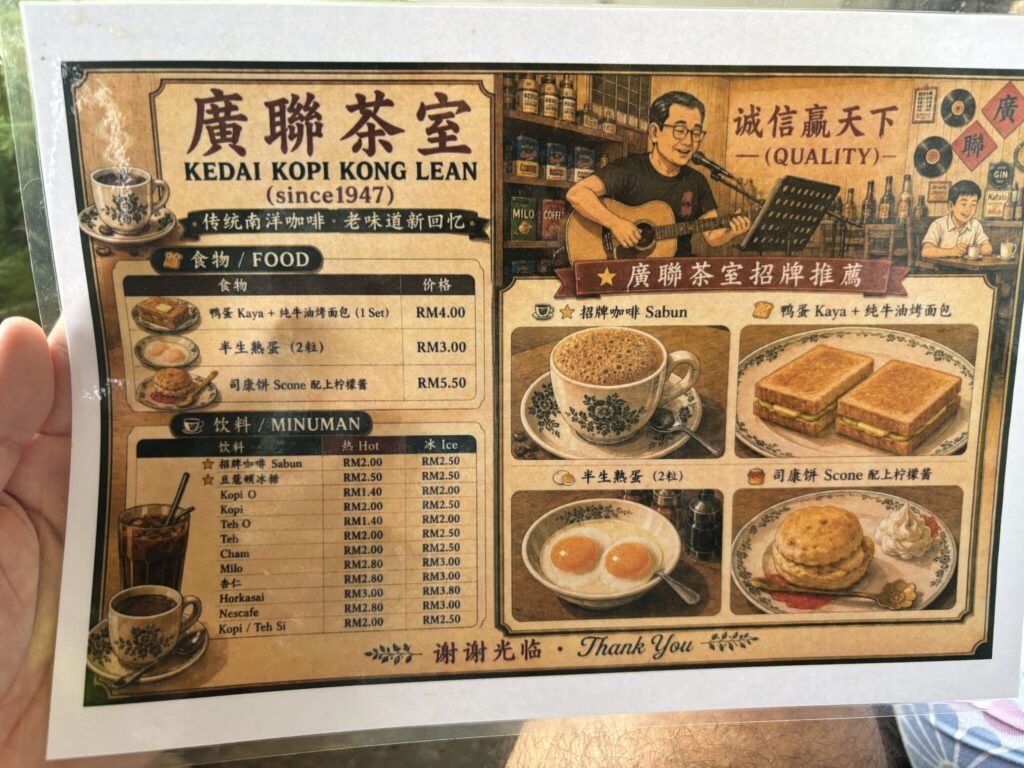
Last weekend we had breakfast at a cafe on the jungle side of Penang Island – operating since 1947, run by a second-generation owner. Their menu? Pure, unadulterated AI.
Number of graphic designers and marketing experts deprived of work? Zero.
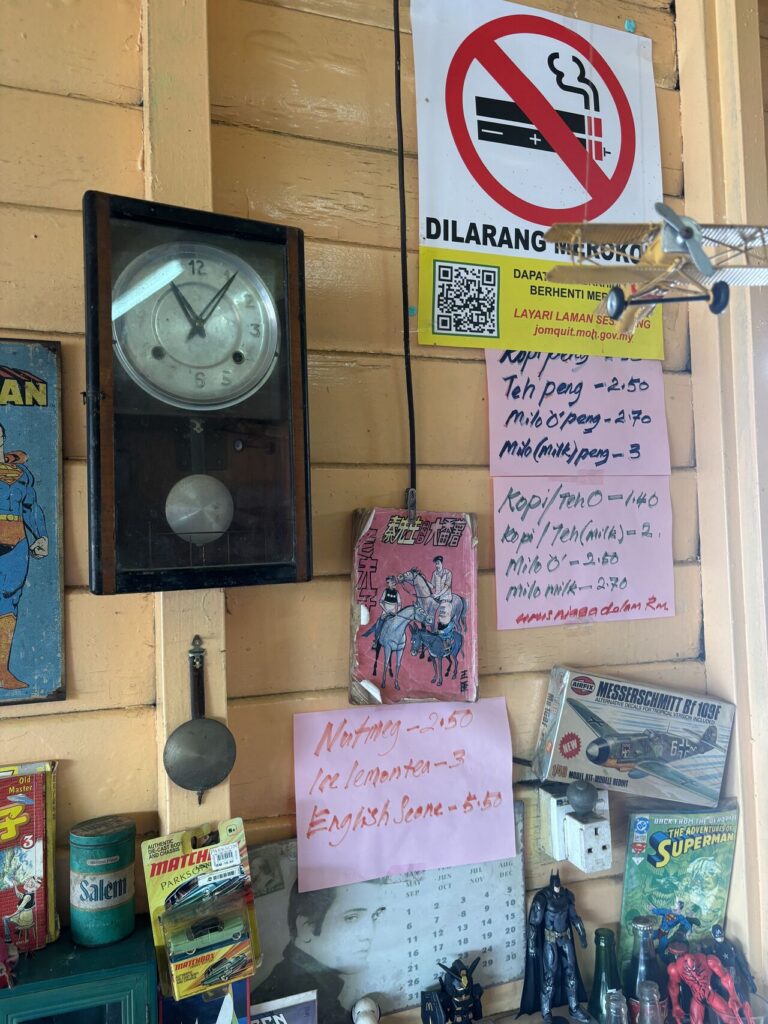
The old menu is still on the wall – hand scribbled on A4 paper. Hiring an expert was never an option. But AI allowed this business owner to provide customers with a better option.
And it worked! Flash (my seven-year-old) grabbed the menu and immediately pointed at the picture of the scone – an order I’d never seen her make before.
The toast and eggs looked nothing like the AI-generated pictures. But alongside the “soap coffee” it was one of the greatest cafe breakfasts in my life.
(I declined the invitation to perform karaoke that early in the morning. But I digress…)
The Takeaway for Business Owners
Next time you see AI-generated content – a menu, a social media graphic, a job listing, a product description – resist the urge to compare it against what a professional could produce. Ask what the real alternative was.
For a 1947 jungle cafe in Malaysia, the alternative was a handwritten scrawl on ageing paper. For plenty of SMEs with 12–100 employees, the alternative is “nothing” or “something a team member threw together in PowerPoint at 11pm.”
AI slop is real. Lazy, corner-cutting use of AI that harms your brand and deprives talented humans of work – that’s dumb.
But judging every AI output against the ideal rather than the reality? That might be dumber.
Am I wrong?